
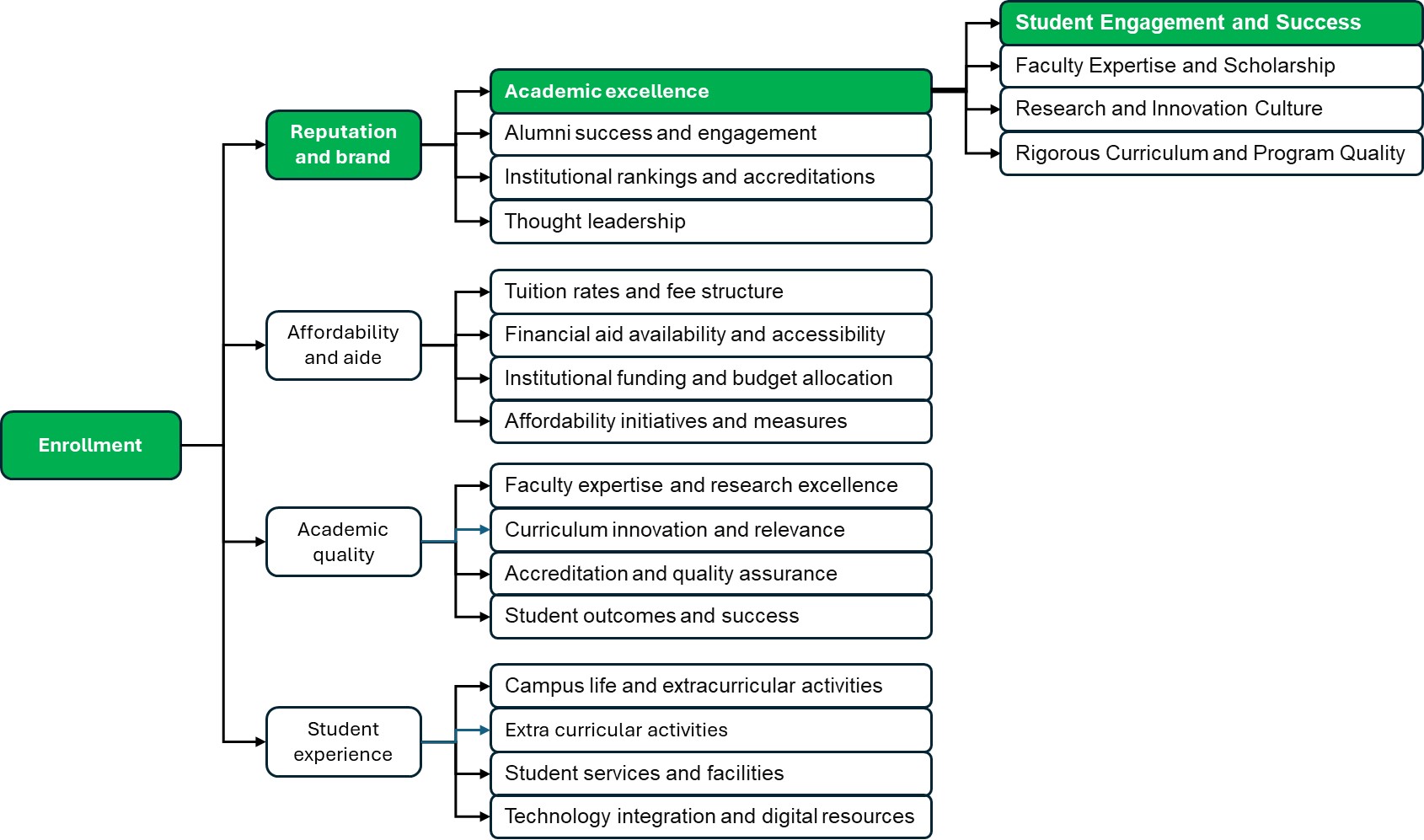
Higher Ed signals for Improving Enrollment
See what might be driving an improvement in enrollment through a broader lens. Some of the Financial Signals that help improve enrollment in the higher education industry illuminate the critical metrics and indicators that directly influence the attractiveness and competitiveness of educational institutions in attracting prospective students. These Financial Signals encompass a wide range of factors, including tuition rates, financial aid availability, marketing expenditures, scholarship budgets, and investments in campus infrastructure.
By analyzing and leveraging these signals, higher education institutions can gain valuable insights into areas for improvement and implement targeted strategies to enhance their appeal to potential students. Whether it’s investing in marketing campaigns, expanding financial aid programs, or upgrading campus facilities, harnessing the power of financial signals empowers institutions to effectively compete for enrollment, ultimately contributing to their long-term success and sustainability in a highly competitive higher education landscape. Here are a few to consider and follow through into an Outcome Map, Report and Mini-Dashboard:
Marketing and Advertising Budget Allocation: Increased investment in marketing and advertising efforts, both traditional and digital, can indicate a proactive approach to attracting prospective students and improving enrollment.
Scholarship and Financial Aid Expenditure: Higher allocations towards scholarships, grants, and financial aid programs may attract more students, especially those sensitive to tuition costs, thereby positively impacting enrollment numbers.
Tuition and Fee Structure Adjustments: Flexible tuition payment plans, reduced fees, or tuition freezes can make education more accessible and attractive to prospective students, potentially leading to higher enrollment.
Retention Rates: High retention rates signal student satisfaction and positive experiences, which can enhance the institution’s reputation and attract more students through word-of-mouth referrals and positive reviews.
Investment in Student Services and Support Programs: Allocating resources towards student services such as academic advising, counseling, career services, and extracurricular activities can improve the overall student experience and contribute to higher enrollment through increased satisfaction and engagement.
Partnerships and Collaborations: Establishing partnerships with local businesses, community colleges, high schools, or international institutions can create pathways for student recruitment and transfer, expanding the institution’s reach and potential enrollment pool.
Research Funding and Grants: Universities with robust research programs and significant external funding may attract students interested in research opportunities, specialized programs, and renowned faculty, thereby positively impacting enrollment.
Investment in Infrastructure and Facilities: Upgrading campus facilities, including classrooms, laboratories, dormitories, and recreational spaces, can enhance the overall student experience and contribute to a positive perception of the institution, potentially leading to higher enrollment numbers.
Online Learning Investments: Increasing investment in online learning platforms, technology infrastructure, and distance education programs can cater to non-traditional students, working professionals, and international learners, expanding the institution’s reach and enrollment opportunities.
Alumni Engagement and Philanthropy: Strong alumni engagement and philanthropic support can enhance the institution’s reputation, visibility, and financial resources, leading to increased enrollment through enhanced brand recognition and scholarship opportunities.