
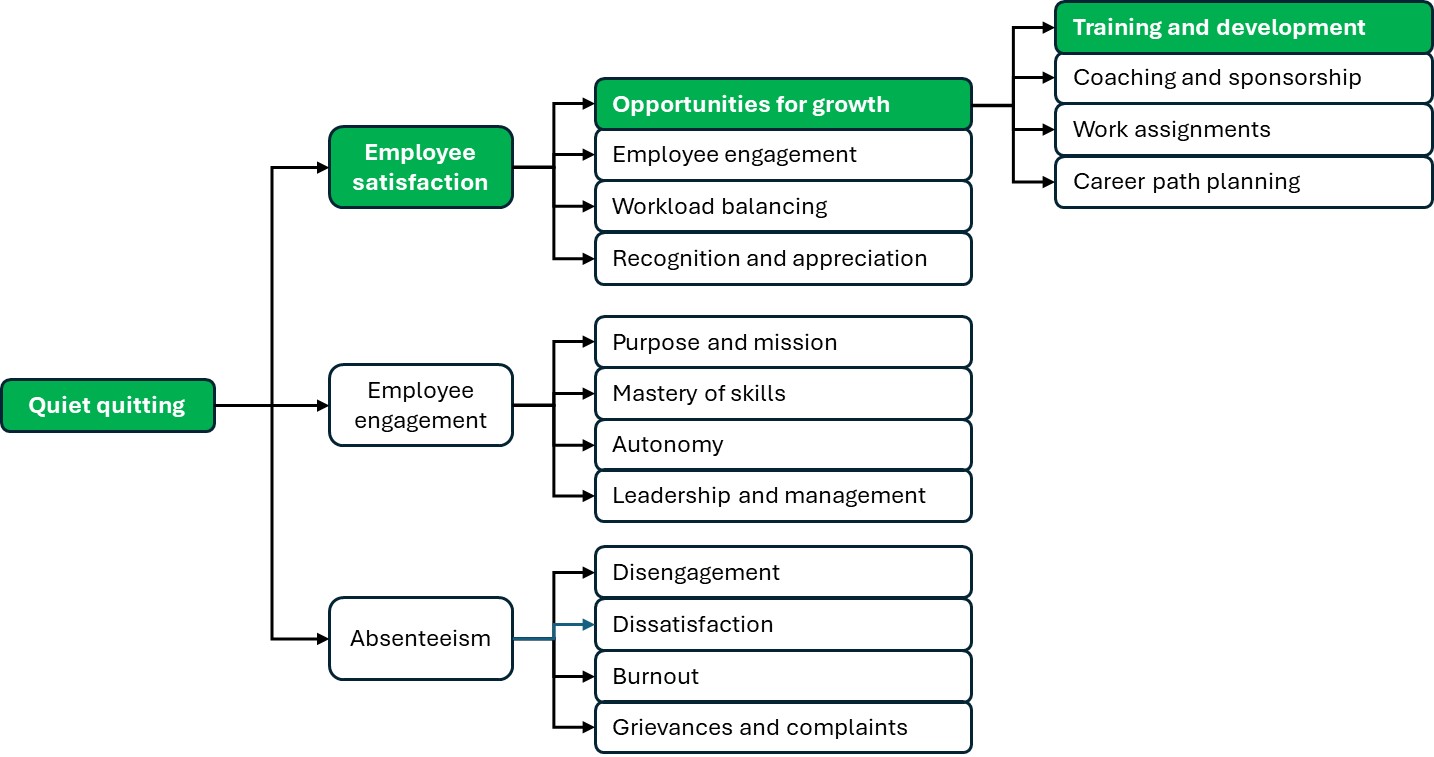
Public Sector signals for Quiet Quitting
Quiet quitting refers to the phenomenon where employees disengage from their roles and responsibilities without overtly resigning, leading to decreased productivity, morale, and efficiency within government agencies. Identifying leading indicators to prevent or address this phenomenon is crucial. These Financial Signals encompass a range of metrics and indicators that offer insights into employee satisfaction, engagement, and turnover rates. From analyzing budget allocations for employee training and development to monitoring expenditures on employee benefits and compensation packages, understanding these signals is vital for identifying potential issues and implementing proactive measures to mitigate quiet quitting.
By leveraging Financial Signals within the public sector, government officials and HR professionals can pinpoint areas for improvement, enhance employee morale and retention, and ultimately ensure the efficient delivery of public services to citizens. Whether it’s investing in professional development programs, revising compensation structures, or fostering a positive organizational culture, harnessing the power of Financial Signals empowers government agencies to address the root causes of quiet quitting and cultivate a motivated and productive workforce dedicated to serving the public interest. Here’s a list of financial signals that can help detect and mitigate “quiet quitting” in the public sector:
Overtime Costs: An increase in overtime expenses may indicate that employees are overburdened or disengaged from their work, leading to reduced efficiency and potential burnout.
Absenteeism Rates: Monitoring absenteeism rates can reveal patterns of disengagement or dissatisfaction among employees. High rates of unscheduled absences may signal underlying issues that need to be addressed.
Employee Turnover Costs: Calculating the costs associated with employee turnover, including recruitment, training, and lost productivity, can highlight the financial impact of “quiet quitting” on the organization.
Employee Satisfaction Surveys: Conducting regular employee satisfaction surveys can provide valuable insights into morale, job satisfaction, and potential signs of disengagement or “quiet quitting.”
Training and Development Expenses: A decrease in investment in employee training and development programs may indicate a lack of commitment to employee growth and retention, contributing to “quiet quitting.”
Grievances and Complaints: Monitoring the number and nature of employee grievances and complaints can help identify underlying issues that may be contributing to disengagement and “quiet quitting.”
Performance Metrics: Tracking key performance indicators (KPIs) for individual employees and teams can reveal trends in productivity, quality of work, and engagement levels, providing early warning signs of “quiet quitting.”
Budget Allocations for Employee Recognition and Rewards: Assessing budget allocations for employee recognition programs and rewards can indicate the organization’s commitment to acknowledging and valuing employee contributions, which can help prevent “quiet quitting.”
Workload Distribution: Analyzing workload distribution among employees can identify instances of overwork or underutilization, which can contribute to disengagement and “quiet quitting.”
Exit Interviews and Surveys: Conducting thorough exit interviews and surveys with departing employees can uncover valuable insights into the reasons for their departure, including signs of “quiet quitting” such as disengagement or dissatisfaction.